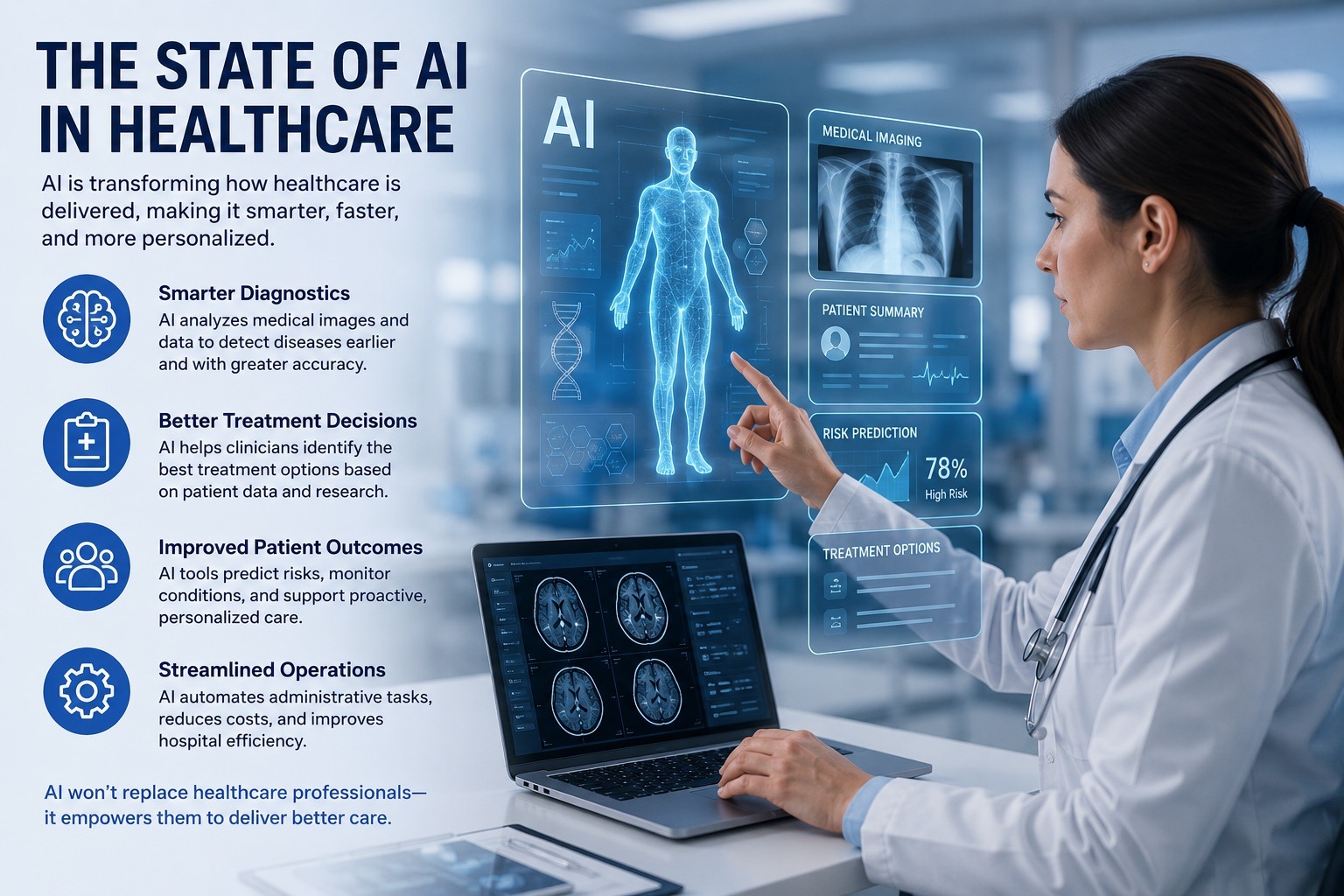

Artificial intelligence is rapidly moving from the experimental stage into everyday healthcare, with hospitals, physicians, researchers, and technology companies using AI to improve diagnosis, treatment, and patient care.
AI-powered tools are helping doctors analyze medical images, identify potential diseases earlier, summarize clinical records, and predict which patients may be at higher risk of complications. Generative AI is also being tested to reduce administrative workloads by drafting clinical notes, answering routine questions, and helping clinicians find relevant information in large medical records.
The technology, however, is not without challenges. Healthcare organizations must address patient privacy, cybersecurity, regulatory requirements, and concerns about inaccurate or biased AI-generated recommendations. Most experts emphasize that AI should augment—not replace—clinical judgment.
As adoption accelerates, the healthcare industry is entering a new phase in which the key question is no longer whether AI will be used in medicine, but how safely and effectively it can be integrated into patient care.